Tuesday, July 19, 2016

Virtually Analyzing Constructivism

Virtually Analyzing Constructivism
Chapter 10 Reflection
     I definitely enjoyed reading through this chapter because I seem myself as a constructivist who is constantly working on things that revolve around creativity and hands on experience. A lot of my previous class projects had to do with the constructivist theory and how everything works within that theory. I also learned a lot about collaboration and cooperation in a few of my other classes, so reading this in the text was a nice recap and refresher for me. The most interesting part that I found to be captivating was the section about technology and learning. I was excited when I started reading this section because I'm an Information Technology with Education. I feel like a nerd when I start reading this kind of material and information. There are several different learning environments that refer to technology as a resource that I enjoyed reading about. I like the ideas behind virtual learning environment except that with virtual learning, some students may just like the concept of a game and only play and experience the learning as a game. On the other hand, I think that more children will learn today this way because technology is such a major role in life today and it is only going to increase as life goes on. 

My Experience with Create, Evaluate, and Relate in Chapter 10

Create: Images of Inquiry


Evaluate: Social Network your Classroom


Relate: Cognitive Apprenticeships

     A type of cognitive apprenticeship experience that I would create in my classroom would revolve around budgeting, coupon cuttings, or having an in class store where the students would be able to experience this type of activity that would normally happen in these type of situations. I could also take the students to a farmers market to first evenhandedly experience a brief market experience face to face as to how everything is run. I think that incorporating cognitive apprenticeship into the classroom is an effective approach and should be highly applaud when teaching material that the students can strongly make a connection to in a real-world situation. Engaging into a cognitive apprenticeship can beneficially open doors in the students' minds by creating experience with something that they are familiar with and perhaps will see or encounter as they grow older in future circumstances. Some challenges may revolve around the budget of the school or the approval to do cognitive apprenticeship. Not every school is fortunate enough to have such reliable resources in which they can afford to add big extra activities to the menu of their curriculum. 


Thursday, July 14, 2016

Taking a look at the Cognitive Point of View

Taking a look at the Cognitive Point of View
Chapter 9 Reflection
   This chapter was filled with information about a variety of learning strategies that are used at different times and for several subjects. I was surprised when I read about the CAPS reading strategy because I recently taught this strategy to a group of fifth graders who had difficulty with comprehension and problem solving skills. I enjoyed my experience while teaching this strategy and while reading about it, giving me the opportunity to reflect on my past field work experience. It was nice to see all of the different heuristics that tag along throughout this chapter. Most of the strategies, I think I would see myself using in my future classroom like the working-backward strategy. 

My Experience with Create, Evaluate, and Relate in Chapter 9

Create: Concept Transfer
The mathematical activity that I would plan to do in pairs would be egg carton multiplication. The numbers are listed from 1 - 12 in each egg carton and two pom poms are placed into the egg carton. Each player will shake the egg carton while it is closed. When they open the egg carton, they will multiply the two numbers where the pom poms landed. This is a math activity that helps the students with their multiplication skills without relying on flash cards or other “plain” tools. This activity will capture the students attention and engage them into a different learning experience that will entertain them while they learn.

Evaluate: Finding Lesson Plans
What websites did you find?

What are the strengths of these websites? What are the weaknesses?
    The strengths of these websites is that all of these websites provide lesson plans and several resources that can be used for teaching different material. All of these websites list lessons that range in ages, grades, and subjects. A weakness of these websites is that for access to some of the materials or utensils, the lesson plans are not free. I think that it's not fair for other teachers to charge others for lesson plan templates when in reality, a teacher is charging for the material, style, and design that is printed out on the paper. The prices range up to five dollars or more sometimes and I find that to be outrageous. 

Who created these lesson plans? Is there any way to submit feedback to find out about the success of the lesson plans?
     The creators of these lesson plans are retired teachers, educators, or teachers that are still in the work field now. Each of these websites have a rating system of 5 stars and a space to provide comments of the lessons to the authors of each lesson which is open to other customers who are interested in downloading, performing, or purchasing the lesson plans. 

Relate: Critical Thinking
Christine Liao, Jennifer L. Motter, & Ryan M. Patton
Art Education

Write a summary, what are the key points?
Discuss how this article applies to your future teaching career?

Wednesday, July 13, 2016

Enrichment through the Information Processing Approach

Enrichment through the Information Processing Approach
Chapter 8 Reflection
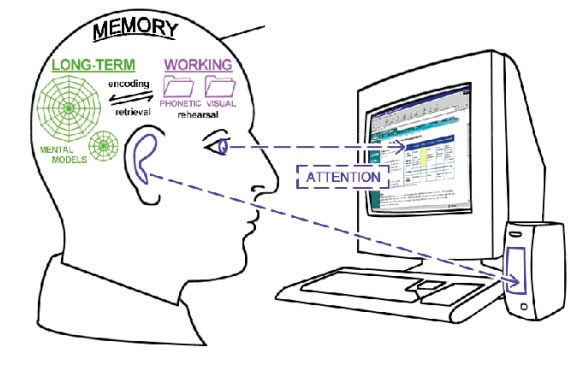
     While reading this chapter, I was surprised to read about all of the general and specific concepts that relate to how a person is learning cognitively. It's always interesting to read about how the brain works, especially when it comes to the memory systems within the brain. There are so many small components that make up the entire systems: working memory, short-term memory, and long-term memory. I also liked exploring the ways that people retain information such as rote memorization or by using the keyword method. Personally, I find myself using the keyword method often because remembering a whole definition word for word is sometimes difficult, but if I can remember one specific word that relates to the topic, I am usually able to remember the rest. 


My Experience with Create, Evaluate, and Relate in Chapter 8

Create: Understanding the way you learn
Here is the link to my concept map created using bubbl.us!

Evaluate: Procedural Knowledge in Simple Tasks
Here is the link to my presentation using Google Slides! Make sure that you click the present tab so you can see the animations and transitions of the presentation.

Relate: Considering Cognitive Psychology

Tuesday, July 12, 2016

Examining Behavioral Views in Education

Examining Behavioral Views in Education

 Chapter 7 Reflection
     While reading this chapter, I started to think about what my teachers used to do to regulate classroom management through the behavioral perspective when I was in Elementary School. Although I enjoyed reading the statistical aspects of Behaviorism, I really enjoyed reading about the in depth concepts of reinforcement, punishment, and ways to promote positive behavior in the classroom. I remember that my teachers used to rely primarily on time outs as a type of punishment and even though it is discussed in the course reading, I still don't believe that putting a child in time out constantly will teach them anything about discipline if they do not seem to care. I liked reading briefly about the token reinforcement system because I have seen how well students respond to that type of system in a classroom setting. It's something that the children would participate in knowing that they would be rewarded afterwards. 

My Experience with Create, Evaluate, and Relate in Chapter 7

Create: Using Behaviorism in the Classroom

Evaluate: Online Advertising
What are they selling?
Teeth Whiting - In this advertisement, the product that the company is selling are 3-D Crest Teeth Whiting Strips. 
Genie Waist Training - In this advertisement, the product that the company is selling is a Waist Training Belt.

Whom are they marketing to?
Teeth Whiting - This company is marketing towards anyone who desires to have the "perfectly white-colored" smile.
Genie Waist Training - This company is targeting women who desire to have an "hourglass" body shape. 

How are they using behaviorist principles in their persuasion practices?
Teeth Whiting & Genie Waist Training - Both of these advertisements use the approach of imperfections in people's appearance to suit the society's standards today. People complain about their appearance and are always looking for quick easy fixes to changing their appearance. Teeth Whiting & Waist Training are two ways that society is using to alter our appearance to our liking. 

Relate
What kind of social information do these people allow their friends to see (pictures, group membership)?
Two out of the three individual profiles that I looked at allowed their friends to view other people on their friends list. All three of the individuals allowed others to see their pictures, their likes, their videos, and basic information about them. 
What would you learn about acceptable behavior after looking at this person's profile page?
After looking at each of these people's pages, I can see that they are all on different levels of acceptable behaviors. It is clear that each of these individuals have their own opinions as to what is considered acceptable behavior when sharing information online. Some people would cherish their privacy while others are like an open book. 
How might the distinction between learning and performance apply to the people who are posting on these sites? What might lead them to post more than they know they "should"?
The distinction between learning and performance may apply to the people who are posting on these sites because some people may learn that certain information needs to be kept in privacy compared to other information. They could have learned this through an incident that they experienced personally or have read about. So, this would impact their performance on what the people would end up doing online such as precautions of what they are posting, sharing, or allowing others to see. When it comes to posting more than what it necessary, some people may be in search of attention or conversation in which they would know that if they posted something specific, that someone is bound to respond whether it is positive or negative.  

Thursday, July 7, 2016

The Deep Extent of Language and Culture Diversity

The Deep Extent of Language and Culture Diversity

Chapter 5 Reflection
     This chapter captured my attention as it continued to go in depth with language development and flow into immigration. I learned a lot about how to tackle certain areas of literacy and what to do with certain situations of teaching academic language and when responding to different dialects. Now when I think about the term academic language, I think of it as teaching an entire new language to people that need to understand the aspects of in order to succeed in their schooling environment. It's also another way to prepare the students for professional situations and advancements in the future. When teaching students with different dialects, I learned that even though a few pronunciations and vocabulary sounds may sound different, they are not errors or incorrect. I also enjoyed reading about the four student profiles: balanced bilinguals, monolingual/literate students, monolingual/preliterate students, and limited bilingual.

My Experience with Create, Evaluate, and Relate in Chapter 5


Create: Supporting Emergent Literacy
Reading Rockets - Awards & Reading List
This website has award winning children’s books that can be used to teach reading and help struggling readers. There is also a wide variety of book topics ranging from the letters A-Z. Most of the topics focus around the world of literacy. This is my favorite website to look through for literacy development. It’s amazing how it separates into book types for all kinds of literacy challenges and situations.
This website has award winning books that are targeted towards adolescents. It consists of a variety of books that can be used while working with “Tweens and Teens.”
This website promotes literature and language development through the specific use of classic books. This site also divides the books into categories that are self-explanatory when looking for a specific book type. The resources on this website also range from infancy to elementary.
Children’s Books Guide - Top 100 Books of all Time
This website displays the “top 100 books of all time” in which teachers use in their classroom at some point in time. It also shows popular book lists, separated subjects, and books that are targeted for those who have social & behavioral issues.
Children’s Books & Reading - Begin & Improve Reading
This website has a ton of other website links to located all types of books. The best part of this website the sections where it displays what to do when beginning to read and reading improvement. It provides a few strategies as well as books to use for beginners and improvers.

Evaluate: Addressing the Needs of Gifted Students: “How does your State Rank?”
My own state (New York) is a state that is not mandated and does not have funding available for the Gifted Programs. This completely surprised me, I didn’t think that New York would lack funding for Gifted Programs. I think that political issues as well as budget issues are the primary cause of no funding.It’s hard to think that a school does not have enough money in their budget to foster necessary Gifted Programs for all student’s success, but unfortunately, some schools are in that situation.

Relate: One Month in the Life of a Recent Immigrant
Dear Diary,
It has only been a month and I am already noticing the many differences between here and back home. I feel out of place here, but I am sure that I will adjust. I miss my home and my family, I think I’m actually feeling homesick. I’m sure that this experience will be worthwhile and quite the accomplishment in the long run, but I am starting to have doubts about staying here. I was thinking about going home, but I didn’t want to give up.
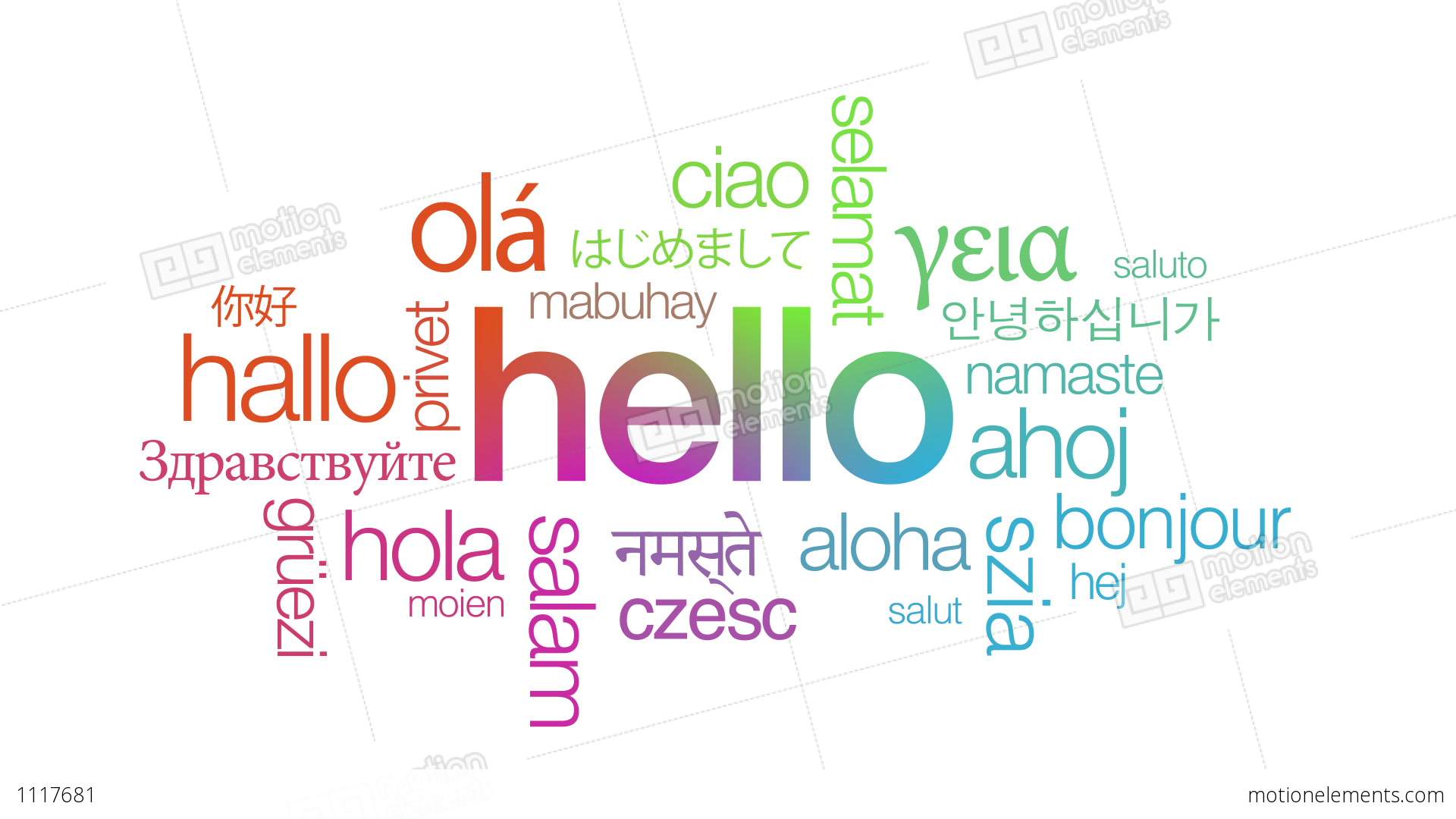
I don’t want to be seen as just an alien who recently ventured my way to America, I want to look the part and fit in.The other day, I decided I wanted to go for a walk around the city, but it was so crowded there was barely any room for me to walk. I also noticed that here in America, there are a lot of different languages that pass through the streets. I don’t understand some of the people as they walk in the city streets specifically because I don’t understand the language that they are speaking. I think I’m going to start trying to learn the basics of some of the languages spoken here so that I can at least understand a little bit. Speaking English is somewhat of a problem because as a Spanish speaker, I don’t know how to translate some of the words. Also, the sentences in Spanish are backwards when translated into English, so I have to remember to switch the order around while translating. While I was walking through the streets, I almost got lost and couldn’t find my way home. There are so many turns and streets in the city, it’s hard to keep up because I’m in a new surrounding.
I noticed that by an app called Duolingo, I can learn some of the basics of the language spoken here. I am excited to learn so much. I need to practice walking and driving through the streets of the city until I learn my sense of direction and how everything moves. I think I will get a map and use the GPS map on my phone until I can learn how everything works. I am currently in search of a job, but I’m not exactly sure where I can go to work. I have to job search all this month. It’ll be tough, but I know that I can get through it.
My greatest concern and fear about living here is that I won’t be able to find a job and end up going to live in a homeless shelter. I really don’t want to see myself in that type of predicament. I know that as a new immigrant, it may be difficult for me to find a job here in the Big Apple, but I won’t give up. I have to just take baby steps and take it one day at a time. I know that I will be alright. So, I will write again soon, until next time diary.

Chapter 6 Reflection
     This chapter surprised me with the content that was written in it. Although there were several concepts that peaked my curiosity, the specific aspect that really caught my attention is located in the picture below. I admired how culture was compared to an iceberg, I honestly would of never thought of that particular comparison. I also enjoyed reading the small scripts of specific students experiences because it reminded me of a book that I read called "AND STILL WE RISE" by Miles Corwin. It's such an interesting read about twelve seniors in high school who are trying to successfully reach their dreams of graduation, but have to over come the obstacles that stand in their way. It was based on a true story and it's something that reminded me of the students stories in this chapter. 

My Experience with Create, Evaluate, and Relate in Chapter 6

Create: What is your Community?


Evaluate: The Internet as a News Source
The current event topic that I decided to search for is Michelle Obama’s new leadership campaign called “Let Girls Learn!” The two articles that I looked at are Michelle Obama Stresses Girls’ Education in Visit to Liberia and Michelle Obama: For girls, a heartbreaking loss -- and an opportunity. The first article is an article written by the associated press of The New York Times newspaper. This was the beginning of the first lady’s trip to a few destinations to establish her campaign. This article was brief and it mentioned how thrilled Mrs. Obama was to start her journey. It gave an introduction of what this campaign is about and a little bit of information about the places Mrs. Obama was going to venture to with her daughters. The second article was the major article that was posted on CNN directly by Michelle Obama who explained how she felt on her journey and what she is planning to accomplish. It started off with two stories of two girls that she had spoken to in Liberia and Morocco. She learned that there are so many girls who want to strive with passion in their educational studies, but are unable to do so. This is a process, but she claims that she will never give up and this is something that she will work on for the rest of her life. It was an amazing, inspirational article to read. The major difference between the two articles is that the first article is from a bystander’s point of view while the second article came directly from the primary source of the current event. I think that it’s important for this campaign to fully take wing and expand it’s boundaries to greater heights. I would love to be a part of this campaign and in the second article, Michelle Obama posts a link for me to be able to do it. I’m very interested and eager to learn more about “Let Girls Learn”.

Relate: Hidden Biases
How do you think most teachers would do on the tests you took?
I took the ‘Young - Old’ IAT and I think that most teachers would probably have the same results as me when taking this test. This test just looked at a person’s visual understanding between young/old facial features and good/bad adjectives. I think it might also reflect on the age of the teacher who is taking the test, it is a psychological visual recognition type test.
How would the context in which you teach (suburban, urban, rural, early, middle, or high school, etc.) influence your answers on this scale?
I don’t think that any context would influence my answer on this scale because it depends on your psychological representation of a younger person compared to an older person. It’s based on your personal opinion.
How do you think a teacher’s hidden biases could influence students? At what point developmentally do you think teacher biases become influential to a student?
A teacher’s hidden biases might influence students by favoritism, always correcting the child, always blaming the child, or always looking for the child to see if the child is going to do something to be scolded for. A teacher might not realize that this is occurring, but they could be spiteful towards the child due to a hidden biases from another situation that has nothing to do with the child. At any point in time in the child’s education career, a teachers biases could reveal another side to the teacher towards that student. It could even occur in a day care.  


Tuesday, July 5, 2016

Getting in Touch with my "Self" and Comprehending Learning Differences

Getting in Touch with my "Self" and Comprehending Differences


Chapter 3 Reflection
     This chapter helped for me to get in touch with inner feelings towards self-concept and self-esteem. I enjoyed reading about the different learning theories that were covered in this section. (Urie Bronfenbrenner, Erikson, & Kohlberg) One of my favorite sections of this chapter was describing the different parenting styles. I didn't know that there were specific types of parenting styles, I just figured that it was all about how parenting styles vary and people create their own parenting style. The concept of identity is another major concept that I took a liking to. It helps to define who the person is which while I was reading, I was able to take myself through each of these steps and identify myself as a future educator. 

Chapter 4 Reflection
     This chapter further expressed the importance of ensuring that all students deserve the equal opportunity to learn. I learned more about different types of disabilities that students could possibly have. I also learned about the different learning styles and preferences. I liked reading about the IDEA. Every child is unique and even if the students have a disability, it does not label the child or change who the child is as a student or person. 


     Cultural diversity is a very important aspect to integrate into all classrooms. I believe that this is important because everyone is still a person who is living on this planet even though they could perhaps come from a different cultural background. It's important to explain to children that not everyone is of the same culture and that is okay. 

My Experience with Create, Evaluate, and Relate for Chapter 3


Create: Images of Self-Concept and Self-Esteem
I used an online poster maker tool called PosterMyWall, to create a photo collage of all of the aspects that I feel that media has on a student’s self-concept. I focused primarily on adolescents, but I do have some images that refer to younger children. I decided to also focus a lot on the concept behind social media and how it is impact students outside of school as well as in school (cyberbullying). The media typically targets a person’s physical body image showing what society would view as “perfect” or “beautiful”. The media also targets on the imperfections of a person’s body and how to achieve the “more acceptable” standards. Depending on how the student is as an individual, the media can either have a positive impact or a negative effect on the student’s self-concept. When a person’s self-concept is in conflict with what may be portrayed in the media, the person could possibly feel depressed or lean towards negative and/or dangerous approaches to obtain the “ideal body image”. I don’t see this to be much of an issue in an Elementary classroom, but in an Adolescent classroom, it could most certainly become an issue. A teacher should always make note of what they notice within the classroom that could have to do with something in the media. A teacher should also be prepared to help.

Evaluate: Media about Violence in the Schools

One of the Most Dangerous Schools in America | ABC World News Tonight | ABC News


U.S. school violence


Student Voices on School Safety


The first two videos are videos that clearly demonstrate and define what types of violence there is in school through news reports and the third video is a video in which the students of a school voice out themselves their own experiences with school violence. Based on these videos, I view violence in schools to be a hazardous issue, especially to students who are just the victims in their situations. The first video really made an impact on me because I could relate to the girl who was mentioned in the video by being bullied and such while I was only trying to get my education and make my parents proud. The second video actually made me cry because it shows how much of an effect bullying has on students. Bullying is actually causing these students to snap and turn on the one person who could perhaps show that they care about their education, their teachers. Based on these videos, school violence is growing to the top of the line dangers for the school community. School violence is highly prevalent and is spreading through all ages of the school districts. It doesn’t only occur with adolescents anymore, but with younger children as well.

Relate: A Snapshot of your Classroom - Moral, Social, and Emotional Development

What is Dyslexia?
The video above allowed me to experience what it would be like for students who have dyslexia. It's an entertaining and engaging experience that peaked my interest into wanting to learn more about dyslexia and strategies in which I can help students who have dyslexia. I really enjoyed this video and this is something that I would even show to other future educators because it is something that I believe all teachers should experience. This video also interested me because I worked with a student who was being evaluated for having dyslexia. The student wrote "ekil" and said that the word was "like" and when asked to read it over and over in a book and in their handwriting, it still said "like".

Monday, July 4, 2016

Pondering Assessments

Pondering Assessments

     There is a lot that I could honestly say about assessment. As much as I disagree with having assessments in the classroom, I know that is it necessary to determine where the students are on different levels of achievement. I would strongly encourage teachers to use different words rather than quizzes, tests, or assessments while evaluating their students. When I was in Elementary school, I used to always grow nervous and develop a sense of anxiety whenever I heard that we were going to have a quiz or test soon. It was always nerve wrecking to me because I would receive something to study, but when I would sit down for the test, I tended to forget what ever it was that I studied for the test. There are different approaches to assessments that teachers could take and an example of an approach would be to not even mention that you are assessing the students. 

     While venturing through another blog, I found this nifty little activity that would be a perfect assessment for a kindergarten classroom. This type of assessment is an assessment that I would use in my own teaching experience because it is a way that will show the teacher what they need to know while creating an entertaining experience for the students. The students would not even know that this is an assessment. I genuinely like what this image says at the top, "Shhhh - Don't Call It An Assessment!" This is something that I will always express to all teachers forever. As long as the students don't know that it is an assessment, the anxiety will perhaps decrease and provide the students with a platform that they will engagingly enjoy while giving the teacher the data that they need. Student self-evaluation is also another part of an assessment that I like to turn to in most of my instructional strategies. 
     Above is an image of two strategies that I would use while giving the students a type of self-evaluation to work with. The traffic light is a way that the students can describe to the teacher by circling a color. To the right are thumbs that the students can show to the teacher to give the teacher a sense of understanding as to where the students are with the content being taught. 

Click the links below to view the videos that I found interesting:

My Experience with Create, Evaluate, and Relate for Chapter 15

Create: Rubrics
A lesson that I would anticipate teaching would be creating a blog post that would record a science project. The science project would be planting a seed and recording how big the plant will grow within a 2 month time period. The students would be keeping track of the water intake and the location of which they have their plant is sitting. The students can take pictures and videos to post in their blogs. The students would be assessed by how they implement the scientific method and how they organize their blog flow with creativity and supporting evidence. The students only homework assignment would be to keep track of their blog posts and make sure to continue to post throughout the 2 month time period. At the end of the project, the students will orally present their blogs to the class and demonstrate their knowledge of what is their hypothesis, some recording methods that they used, and their ultimate conclusion of the final product of the plant’s growth. I used Rubistar to create rubrics for this task. The following links are links to the rubrics.


Evaluate: Authentic Assessments
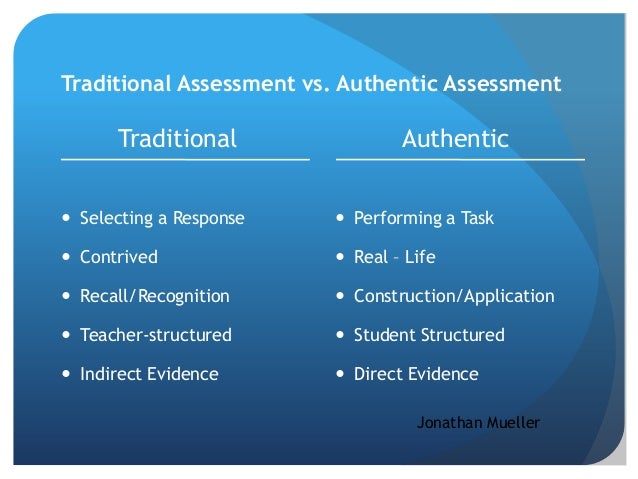
The goals and the objectives that I would hope that my students would meet by the assignment described above is the overall concepts of using the scientific method while experimenting with technology compared to just filling out an ordinary lab report on paper. Personally, I do not like traditional testing because traditional testing looks for only the grade, but authentic assessments allows the students to prove themselves in other ways. I have test anxiety and I know that when I was in Elementary School, I used to always get nervous and shaky before taking an exam or test. With authentic assessment, I feel like students will be more comfortable and relax before engaging into the test. I would probably use a combination of both assessment strategies because in some situations, it may seem complicated to use an authentic assessment strategy. If my students would prefer to use an authentic assessment than I would do my best to provide that type of testing in my classroom.

Relate: Assessment in your Classroom